Dental guides and tools

Straight answers to the questions patients actually ask us, written by our doctors and kept free of sales talk.

Everything here is general information, not dental advice. Your mouth gets an exam, not a web page.

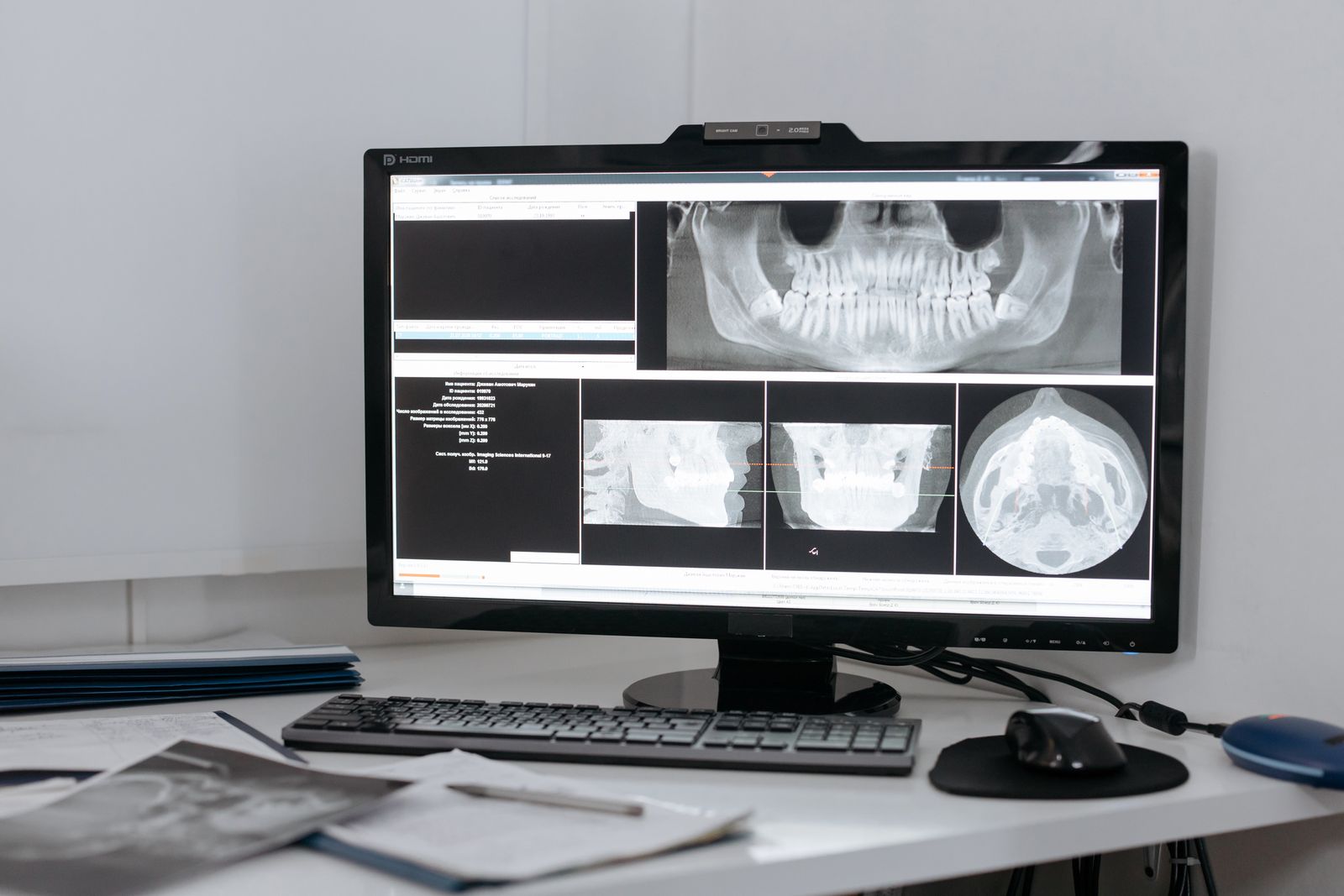
Dentist reviewing digital x-rays on a chairside screen with a patient

Every guide and tool in one place

Seven interactive guides across the site, plus the four deeper explainers below. Nothing here needs a login or an email address.

Decision aid

Crown, onlay or veneer?

Three restorations, three very different amounts of tooth removed. Pick the situation that sounds like yours and see what we would usually recommend, and why.

What is happening with the tooth?

Usually recommended

Composite bonding, or a veneer if you want the shade changed

With most of the enamel intact there is nothing to hold a crown onto, and cutting a healthy tooth down for one is the wrong trade. Bonding is additive and reversible; a veneer removes roughly 0.3 to 0.7 mm of enamel and is not.

Tooth reduction
0 to 0.7 mm
Chair time
1 visit for bonding, 2 for a veneer
Crowns and root canals

What the restoration is made of matters more than the name

1 / 6

Scroll or use the arrow keys

Monolithic zirconia

Flexural strength
1,100 to 1,400 MPa
Appearance
Opaque to moderately translucent
Best for
Molars, grinders, implant crowns

The strongest option and the least lifelike. Cannot be etched, so it is cemented rather than bonded.

Lithium disilicate (e.max)

Flexural strength
About 400 MPa
Appearance
Very lifelike, layered translucency
Best for
Front crowns, veneers, onlays

Our default for anything that shows. Needs a bonded seat and enough thickness (about 1 mm) to reach full strength.

Feldspathic porcelain

Flexural strength
About 100 MPa
Appearance
The most natural of all
Best for
Thin hand-layered veneers

Beautiful and fragile. Only used where a bonded enamel surface carries the load, never on a back tooth.

Gold alloy

Flexural strength
Ductile, does not chip
Appearance
Gold, obviously
Best for
Second molars, heavy grinders

The longest-lasting material we place and the kindest to the opposing tooth. Rarely chosen now for the colour alone.

Porcelain fused to metal

Flexural strength
Metal core, ceramic skin
Appearance
Good, until the gum recedes
Best for
Long bridges

A grey line can show at the gum line after years of recession. We reach for it mainly on multi-unit bridges.

Direct composite

Flexural strength
About 120 MPa
Appearance
Good, stains over time
Best for
Small chips, edge repairs

Placed in one visit with no lab. Expect polishing every few years and replacement sooner than ceramic.

General information, not dental advice. Strength figures are published material properties; what is right for your tooth depends on an exam and x-rays.

Root canal or extraction? The honest comparison

When a tooth is badly broken you get two real choices and two follow-on choices. Here is what each one costs you in visits, bone and years, laid out side by side.

Root canal and crown compared with extraction plus implant, bridge or no replacement
CompareRoot canal + crownEndodontic therapy, then cuspal coverageExtraction + implantRemove, graft, then a titanium fixture and crownExtraction + bridgeThree units carried by the two neighboursExtraction, leave the spaceNo replacement
What happensThe inflamed or necrotic pulp is removed, the canals are shaped and irrigated, then filled with gutta-percha and sealer. A crown follows to protect the tooth.The tooth comes out, the socket is usually grafted, and after healing a titanium implant is placed and later restored with an abutment and crown.The tooth is removed and the two adjacent teeth are prepared for crowns that carry a false tooth between them.The tooth is removed and nothing replaces it.
Visits and timeline1 to 2 visits for the root canal, 2 more for the crown. About 3 to 5 weeks end to end.4 to 6 visits. Expect 4 to 9 months from extraction to final crown while osseointegration happens.2 to 3 visits over 3 to 6 weeks once the gum has healed.1 visit, then a healing check.
Keeps the natural toothYes. Root, periodontal ligament and bone all stay.No.No.No.
Effect on the boneThe socket keeps its ridge. No graft needed.Socket grafting limits the ridge collapse that follows an extraction. The implant then loads the bone and helps maintain it.The ridge under the false tooth resorbs over time. Nothing is loading it.The ridge narrows most in the first 6 months. Grafting at the time of extraction keeps the option of an implant open later.
Neighbouring teethUntouched.Untouched.Both are cut down permanently, even if they were healthy.Teeth drift toward the gap and the opposing tooth over-erupts, which can change the bite.
Typical survivalPublished 10-year survival for a root-treated, crowned tooth sits around 85 to 90 percent.Reported 10-year implant survival is commonly 90 to 95 percent, with peri-implantitis the main long-term risk.Around 10 years on average for a conventional bridge; failures usually start as decay on an abutment tooth.Not applicable. The consequences build slowly over years.
Sample fee range$1,150 to $1,900 for the root canal plus $1,250 to $1,700 for the crown$1,800 to $2,600 for the implant plus $1,600 to $2,400 for abutment and crown$3,300 to $5,100 for three units$210 to $450 for a simple extraction, $350 to $900 surgical

Scroll the table sideways to see every option

  • Root canal + crown

    Best when enough sound tooth remains above the gum for a crown to grip, and the root is not fractured.

    Timeline
    1 to 2 visits for the root canal, 2 more for the crown. About 3 to 5 weeks end to end.
    Sample fee range
    $1,150 to $1,900 for the root canal plus $1,250 to $1,700 for the crown
  • Extraction + implant

    Best when the tooth is not restorable: vertical root fracture, decay well below the bone, or a failed retreatment.

    Timeline
    4 to 6 visits. Expect 4 to 9 months from extraction to final crown while osseointegration happens.
    Sample fee range
    $1,800 to $2,600 for the implant plus $1,600 to $2,400 for abutment and crown
  • Extraction + bridge

    Reasonable when the neighbouring teeth already need crowns, or when bone volume rules an implant out.

    Timeline
    2 to 3 visits over 3 to 6 weeks once the gum has healed.
    Sample fee range
    $3,300 to $5,100 for three units
  • Extraction, leave the space

    Sometimes the right call for a wisdom tooth or a second molar with an intact bite in front of it.

    Timeline
    1 visit, then a healing check.
    Sample fee range
    $210 to $450 for a simple extraction, $350 to $900 surgical

General information, not dental advice. Fees are sample ranges for this demo site and exclude insurance; survival figures are drawn from published literature ranges and vary with the tooth, the bite and home care. Dr. Okafor will give you a written estimate before anything starts.

Gum health

What your gum numbers actually mean

If you have heard a hygienist call out "three, two, four" around your mouth, those are pocket depths in millimetres. Here is the staging system behind them and what each stage changes about your care.

Healthy gums

Probing depth
1 to 3 mm
Attachment loss
None
Bone loss on x-ray
None
Teeth lost to gum disease
No tooth loss from gum disease

What it means

The cuff of gum around each tooth is tight, pink and does not bleed when the hygienist measures it. Six readings are taken per tooth at every recall so we can see any change early.

How we treat it here

Two cleanings a year, full periodontal charting once a year, x-rays on the schedule your risk calls for.

The grade is the speed, not the severity

  • Grade A

    Slow progression

    No bone loss over 5 years. Non-smoker, no diabetes. Heavy plaque with little destruction.

  • Grade B

    Moderate progression

    Under 2 mm of bone loss over 5 years. Smoking under 10 a day, or HbA1c under 7.0 percent with diabetes.

  • Grade C

    Rapid progression

    2 mm or more over 5 years. Smoking 10 or more a day, or HbA1c 7.0 percent and above. Destruction outruns the plaque present.

General information, not dental advice. Staging and grading follow the 2018 world workshop classification; only a full periodontal chart and current radiographs can tell you where you actually sit.

Benefits explained

Your annual maximum, and how fast it goes

Dental insurance is not medical insurance. It is a coupon with a ceiling: a fixed pot per calendar year, three coverage classes and a waiting period on the treatments that cost the most. Tick what you might need this year.

Sample PPO plan: $1,500 annual maximum, $50 deductible, 100 / 80 / 50 coverage

Treatments you might need this benefit year

What the plan pays

$0 of $1,500

$1,500 of your maximum is still available.

Plan pays
$0
Your estimated share
$0
Check your carrier

Three classes, three different waits

  • Class I, preventive

    100 percent

    No waiting period

    Exams, cleanings, x-rays, fluoride, sealants

  • Class II, basic

    80 percent

    Often 3 to 6 months

    Fillings, simple extractions, root planing, some endodontics

  • Class III, major

    50 percent

    Often 6 to 12 months

    Crowns, bridges, dentures, implants where covered

The words on your benefits letter

Annual maximum
The most the plan will pay in one benefit year, commonly $1,000 to $2,000. Anything above it is yours. It resets and does not roll over.
Deductible
Usually $50 per person, taken once per benefit year before Class II and III benefits start. Preventive care is normally exempt.
Waiting period
A stretch after enrolment during which a class is not payable. Waived on many employer plans, rarely on individual ones.
Frequency limitation
A cap on how often a benefit repeats: two cleanings a year, bitewings every 12 months, a crown on the same tooth every 5 years.
Benefit year
January to December on most plans, but plenty run on the employer's plan year. Worth knowing before you schedule in December.
Coordination of benefits
If two plans cover you, one pays first and the other may pick up part of the balance. Combined payment never exceeds the fee.

General information, not dental advice, and not a benefits quote. Every figure here is a sample for this demo site; percentages, maximums and waiting periods differ by carrier and by employer group. We verify your actual benefits in writing before treatment.

A guide is a starting point, not a diagnosis

Bring what you read here to your next visit. We will put the x-ray on the screen, point at what we are seeing and talk through the options with you, not at you.

Dentist talking a patient through an x-ray on a chairside monitor

Cookie preferences

Choose which cookies you allow. You can change this at any time from the link in the footer.